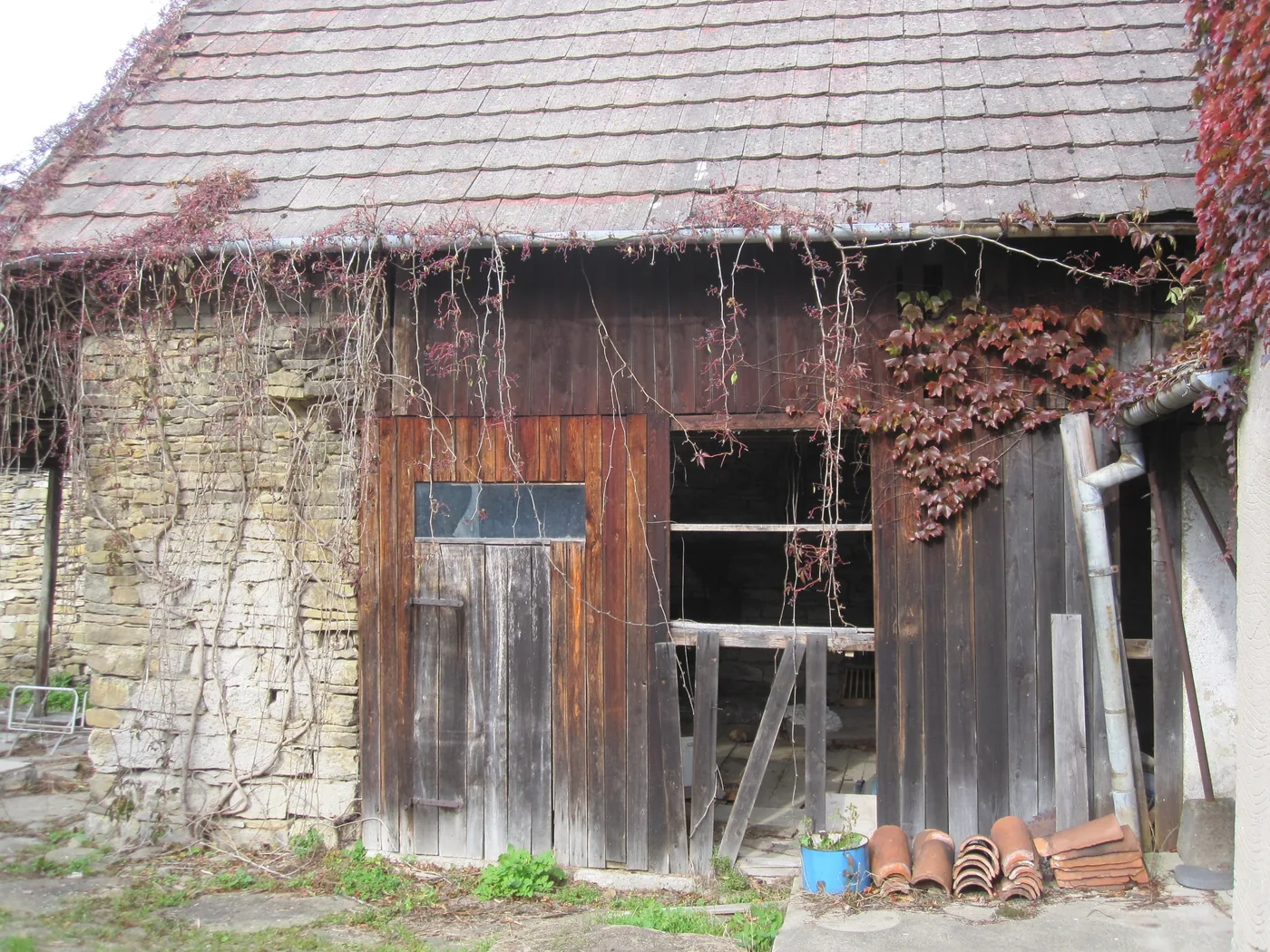
We bought a ruin at the end of a road in 2013.
The mill house dated from 1748. There were barns from 1806 and 1885. The roof was going, the mill room held a millstone under a layer of rubble, and nobody in the village could tell us the year the wheel had stopped turning. There was no plan. There was a building that had been a working farm for three centuries and had spent the last few decades quietly falling over.
Thirteen years later, people get married here.
What we did not do
It would have been faster and considerably cheaper to gut it.
That is the normal path for a building like this. You keep the outer walls because the heritage office requires it, you put a steel frame inside, and you end up with a hotel that has an old face. Nobody would have objected. Some of it would have been better insulated.
We did not do that, and the reason is not romantic. It is that a building assembled that way stops being the thing people came for. If you take a mill and put a conference hotel inside it, guests arrive and find a conference hotel. The walls become scenery.
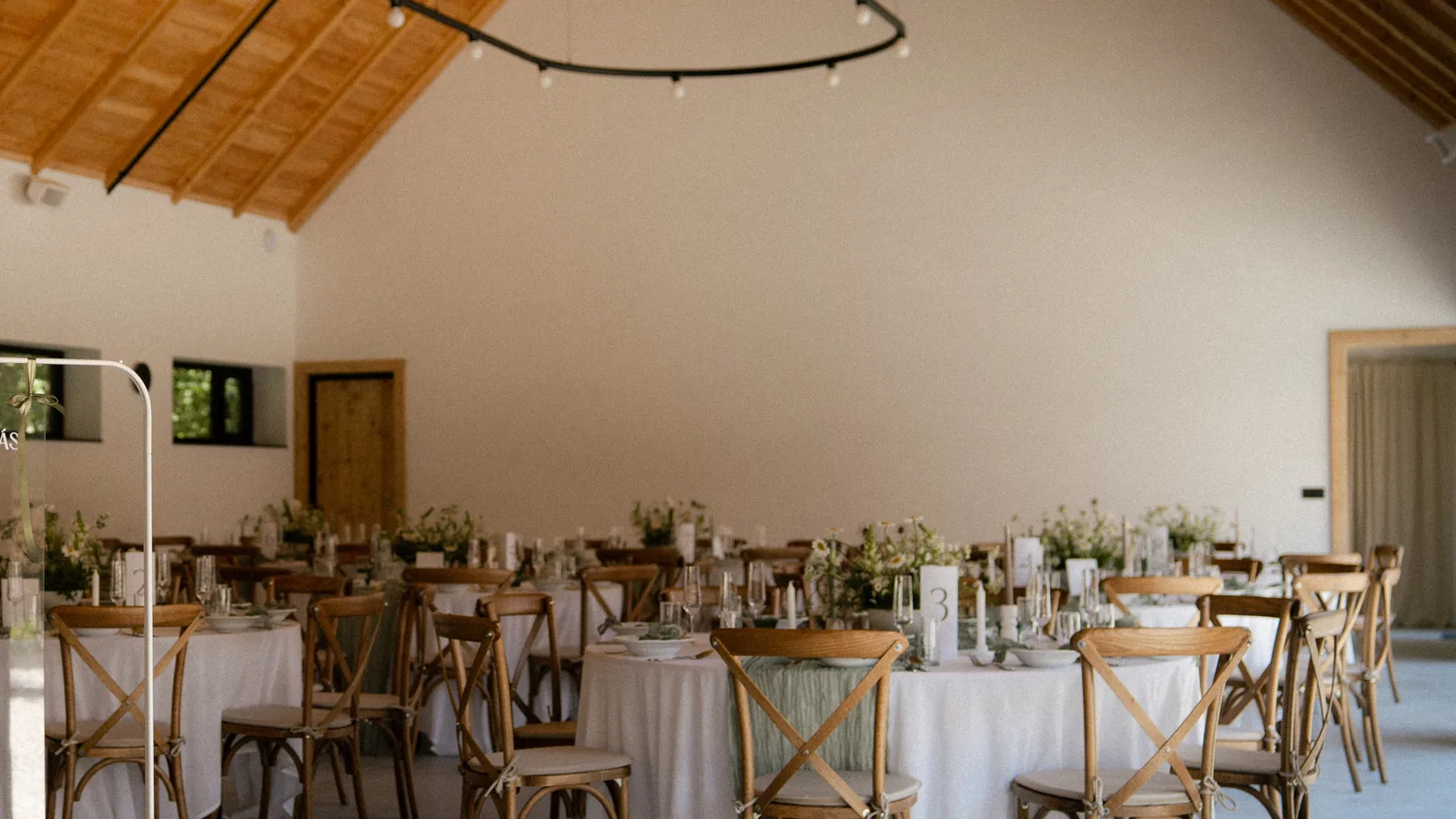
So the barn from 1885 is still a barn. It has beds in it now, but the roof timbers are the roof timbers, and you can see them from the pillow.
Eleven years of not very much
This is the part that gets left out of restoration stories, so it is worth saying plainly: from 2013 to 2024 the estate moved slowly, in the gaps between everything else.
A roof one year. The mill room cleared and dried out. Wiring. Drainage, which is unglamorous and took longer than any of the visible work.
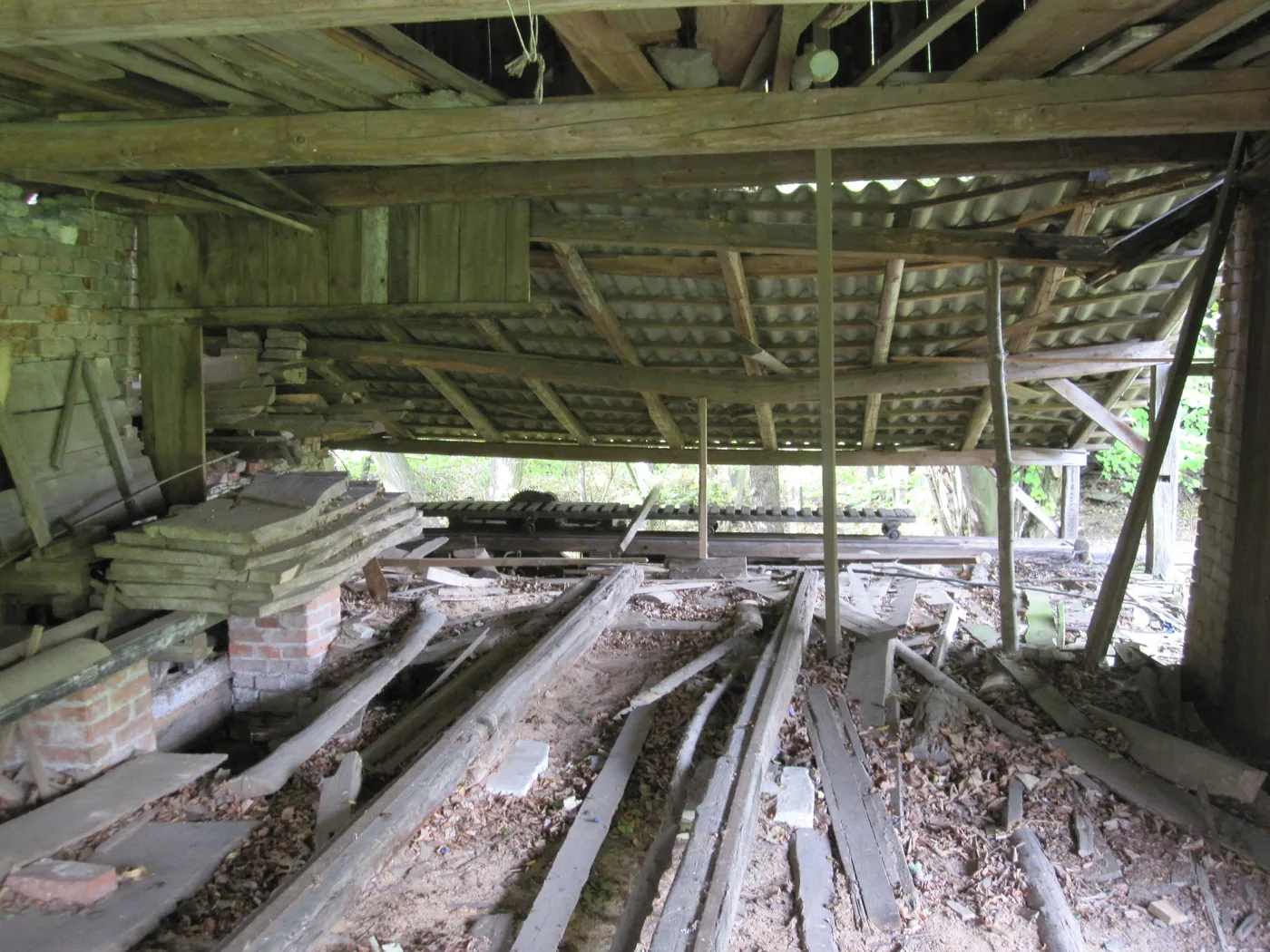
Photographs from 2015 show the mill room with the millstone still sitting in it, untouched. It stayed more or less that way for years.
Restoration at this scale is not a project with a launch date. It is a decade of weekends, and then one year in which everything happens at once.
11 June 2025
That was the day the real work started on several buildings simultaneously. The courtyard shelter went up. The barn became somewhere you could sleep. The kitchen became a kitchen that a caterer would agree to work in.
The same year, the wheel came back.
The wheel
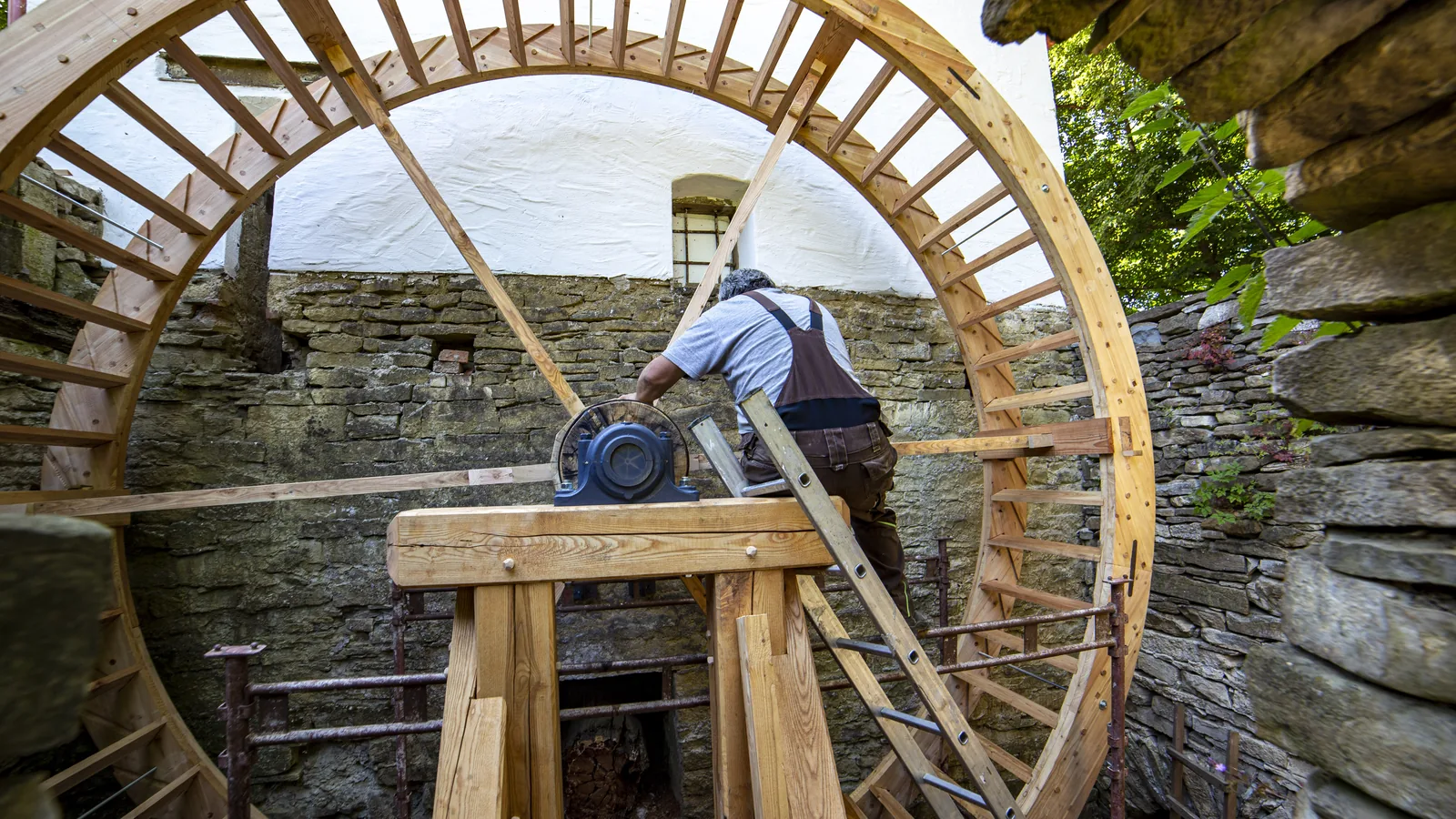
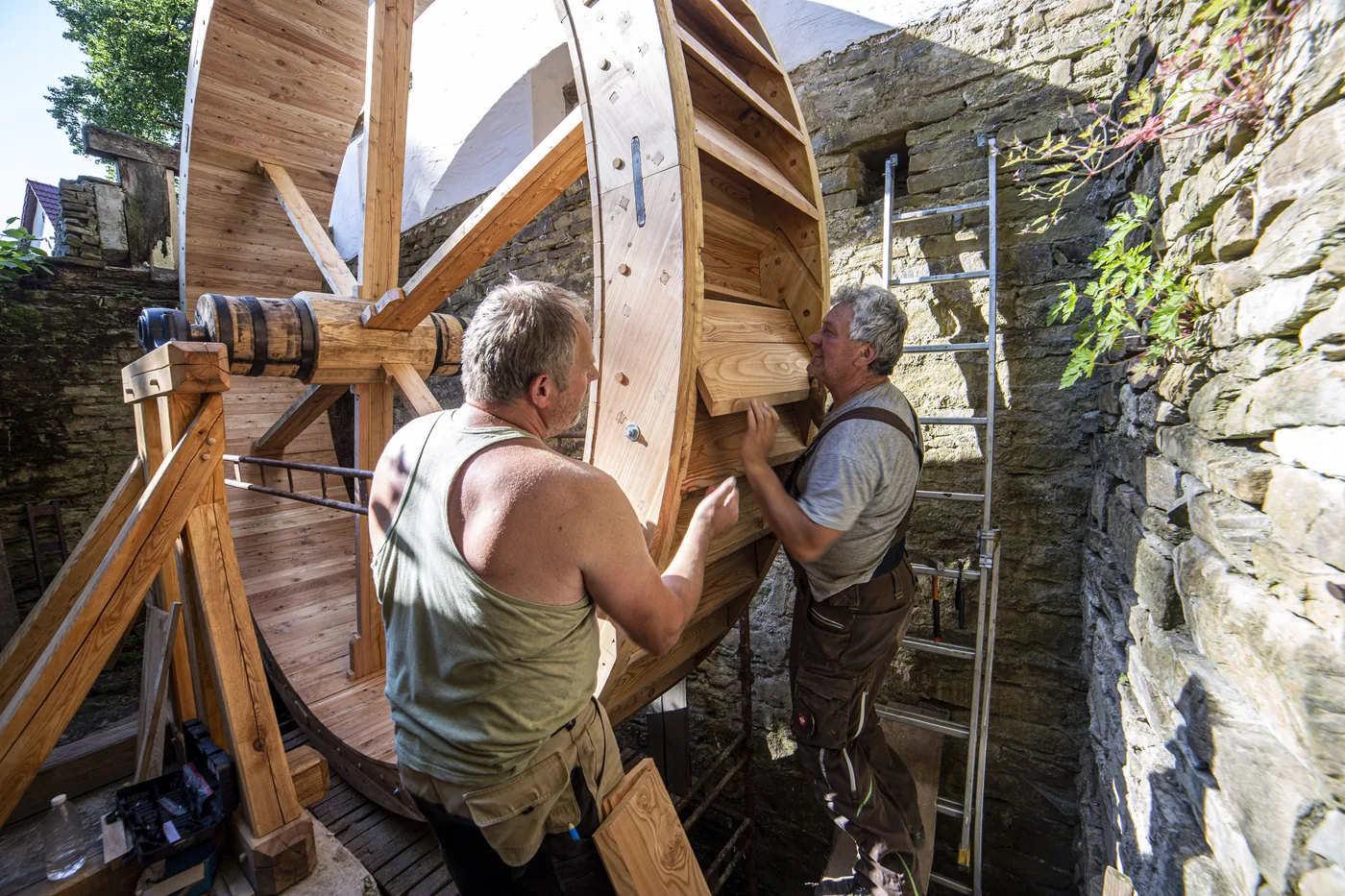
A mill wheel is not carpentry. It is a specific trade, and in Czech the people who do it are called sekerníci: millwrights who shape oak with an axe rather than a saw.
There is a technical reason, not a nostalgic one. A saw cuts across the grain and opens the wood to water, and the wheel rots from the cut. An axe follows the grain and closes it. The difference is between a wheel that lasts years and one that lasts generations.
Ours took six months to build in their workshop and three days to assemble in the courtyard. We watched all three of them.
The estate's logo was forged from iron with a hammer, for the same reason. Not as a gesture. Because a place that spent thirteen years being rebuilt by hand should not have a logo drawn in a font.
6 June 2026
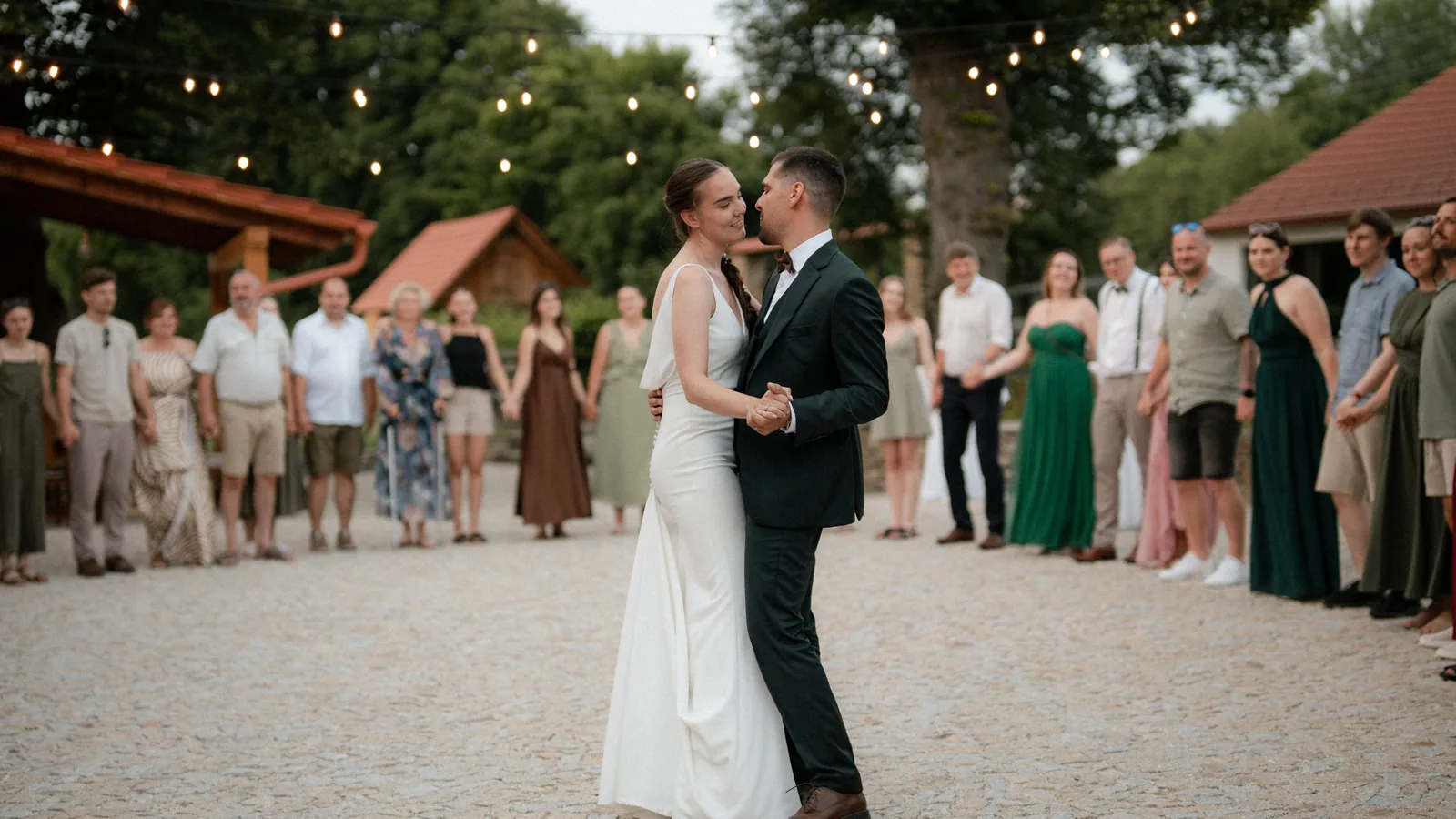
The first wedding. A hundred and twenty guests in a courtyard that had been a builders' yard twelve months earlier.
We live here. Monika and I are the ones who look after it, every day, and we are the people you meet when you come to see it. That is the whole staff. It means we cannot deliver a wedding for you, which is why we ask couples to bring a coordinator. It also means nobody here is working a shift.
Why this is on a venue website
Because you have a choice between hundreds of castles and chateaux in this country, most of them older, several of them grander, and a number of them with better roads.
What none of them can offer is that somebody stood in the rubble in 2013 and decided this specific building was worth thirteen years. That is not a feature we can list next to the parking capacity. But it is the reason the courtyard feels the way it does at nine in the evening in June, and it is, in the end, the only thing here that could not be bought.
Old walls. New stories. We meant it fairly literally.
Kománkův mlýn is a restored 1748 mill estate in the White Carpathians biosphere reserve, an hour and a half from Brno, an hour and twenty from Bratislava and an hour forty-five from Vienna. Read the longer story or come and see it.
Photographs: František Gajovský (mill wheel, 2021) and the Kománkův mlýn archive (2013).