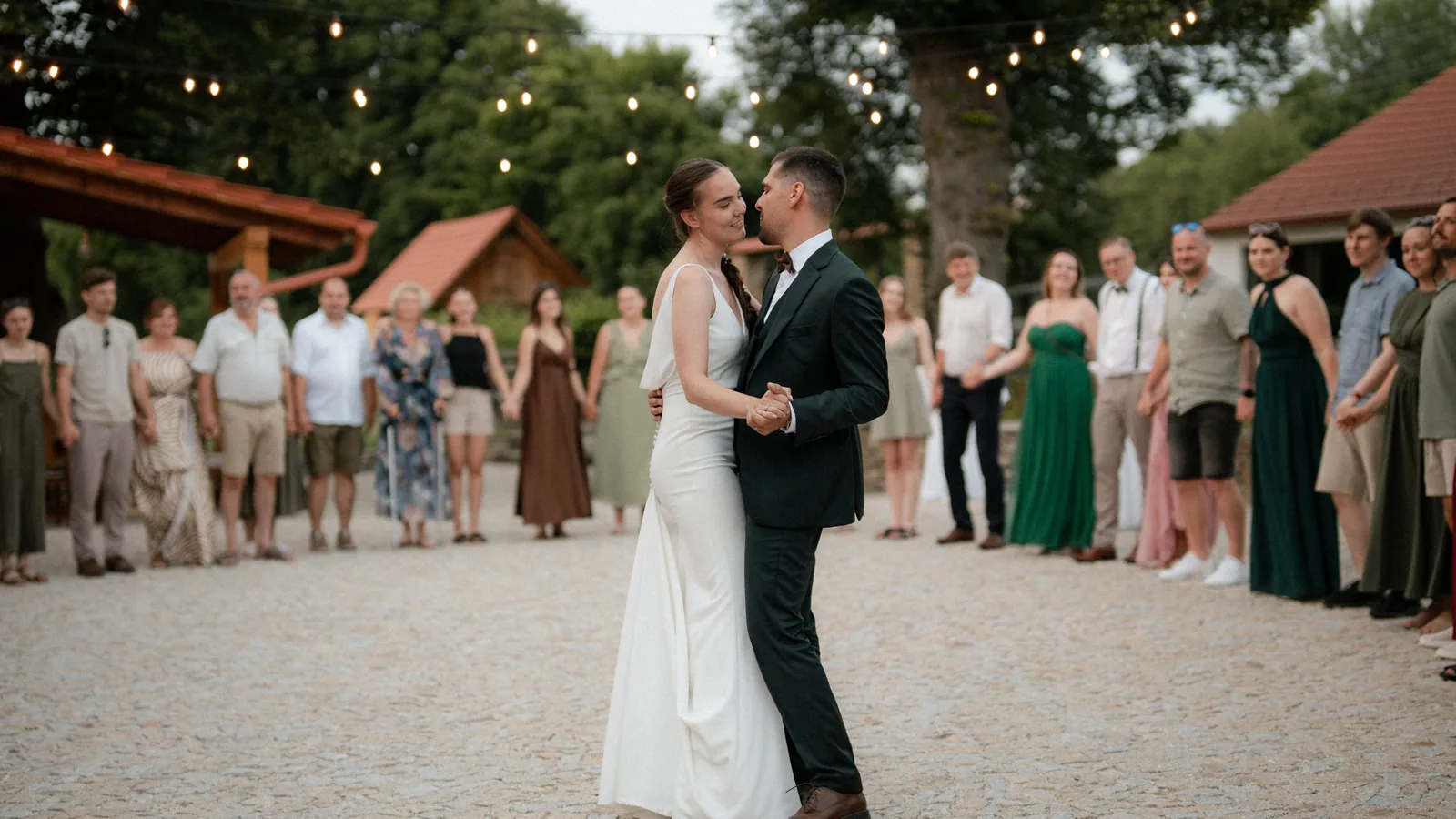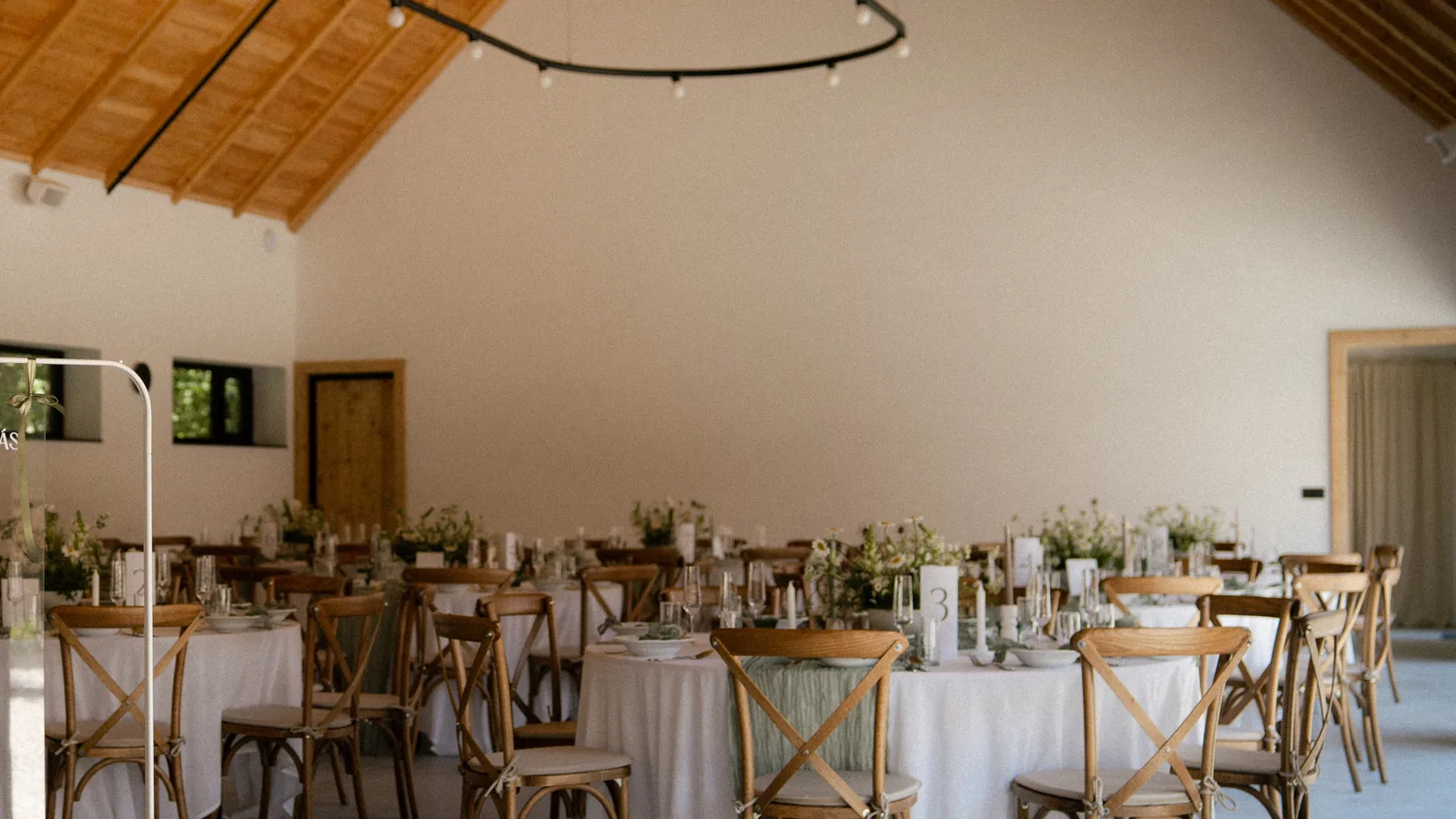
There are two ways to get married at a Czech venue, and almost everything written in English covers only one of them.
The first is a legal Czech civil marriage. It is entirely doable, plenty of foreign couples do it every year, and it involves an apostille, sworn translations, a certificate that expires after six months, a court interpreter who is required by law to stand next to you during the ceremony, and 8,000 CZK in state fees.
The second is that you sign the register at home, in your own language, a few weeks before you fly. Then you come here and have a wedding.
Most foreign couples who celebrate in the Czech countryside do the second one. Nobody tells them, because the agencies writing about this have an interest in selling the first. Here is what each actually involves.
Route one: a legal civil marriage in Czechia
The documents
Both of you will need:
- passport, or national ID for EU citizens
- birth certificate
- proof of citizenship
- a certificate of legal capacity to marry (vysvědčení o právní způsobilosti k uzavření manželství, also called a Certificate of No Impediment or Ehefähigkeitszeugnis)
- confirmation of your personal status and place of residence
- a final divorce decree or a death certificate of a former spouse, where relevant
Then the registry office adds two forms filled in on the spot, and you need two witnesses at the ceremony. The legal minimum age is 18.
The three things that catch people out
The six-month clock. The certificate of legal capacity to marry must not be older than six months on your wedding date. Everything else in the process has to fit inside that window, including the apostille and the translations. If you are British, note that giving notice at home takes at least 28 days before the certificate is even issued, so the clock is shorter than it looks.
The Foreign Police confirmation. If you are not an EU, EEA or Swiss citizen, you also need a confirmation of lawful residence in the Czech Republic issued by the Foreign Police, dated no more than seven working days before the wedding. That means an in-country errand in the final week, not something you arrange from home. EU, EEA and Swiss citizens and their family members are exempt.
Americans cannot get the main certificate at all. No United States authority issues a certificate of legal capacity to marry. US citizens instead swear a personal statement about their marital status and have it notarised at the embassy, currently around 50 USD, which then needs sworn translation like every other document. This is normal and registry offices know it, but it is worth raising early rather than discovering it in month five.
Apostille and translation
Every foreign document needs an apostille if your country is a party to the Hague Convention, or superlegalisation if it is not. Then all of it must be translated into Czech by a Czech court-appointed sworn translator, a soudní překladatel. Expect roughly 500 to 900 CZK per normostrana, the 1,800-character unit Czech translators bill in, and more for urgent work. A regular translation agency, however good, is not accepted.
The interpreter is not optional
If either of you does not understand Czech, a court-appointed interpreter (soudní tlumočník) must be present at the ceremony. This is a legal requirement, not a service. Budget from around 2,500 CZK, more at weekends and more again for the travel out to a rural venue.
The fees, correct as of July 2026
This is where most English-language sources are simply out of date. Several well-known expat sites still quote figures from before the 2024 increase. The current amounts, set by zákon č. 634/2004 Sb., item 12:
| Fee | |
|---|---|
| Marriage where neither partner has permanent residence in Czechia | 5,000 CZK |
| Marriage where one partner has permanent residence in Czechia | 3,000 CZK |
| Permission to marry outside the official ceremonial hall or outside official hours | 3,000 CZK |
| Certificate for a church wedding (osvědčení) | 500 CZK |
| Waiver of the requirement to submit a document | free |
So a legal wedding for two foreigners held at a venue rather than in a town hall costs 8,000 CZK in state fees, plus interpreter, plus sworn translations. Verify the figures with the registry office when you file, because they do change.
The rule nobody explains in English: správní obvod
A registry office may permit a marriage at any suitable place, but only within its own administrative district, and only if the place is considered dignified for the purpose. This surprises almost every foreign couple, because it means you do not choose your registrar. The venue chooses it for you.
Kománkův mlýn is in Javorník, which falls under the registry office at Velká nad Veličkou, the neighbouring village. If you want a legally binding ceremony in our orchard, that is the office that grants the 3,000 CZK permission, and it is the office we deal with. It is a small municipal office, not a Prague matrika processing forty weddings a week. We can point you to them and tell you what they have asked of couples before you.
If a document is genuinely impossible to obtain
Czech law allows a registry office to waive the requirement to submit a document where getting it is bound up with an obstacle that is hard to overcome. It is free, it is requested in writing, and a sworn statement replaces the missing paper. It is written primarily for people under international protection, but the test in the statute is general. If your home country's bureaucracy is the obstacle, ask about it rather than giving up.
How long the whole thing takes
Plan on six to twelve months for the wedding, and a minimum of two to three months for the documents alone. Registration itself is often quoted at about a month, one to two months realistically, and up to six in complicated cases.
Route two: legal at home, celebration here
You go to your own civil registry, in your own city, in your own language. You sign. Depending on where you live this takes somewhere between twenty minutes and a few weeks of notice, and it costs a fraction of the above.
Then you fly here and have the wedding.
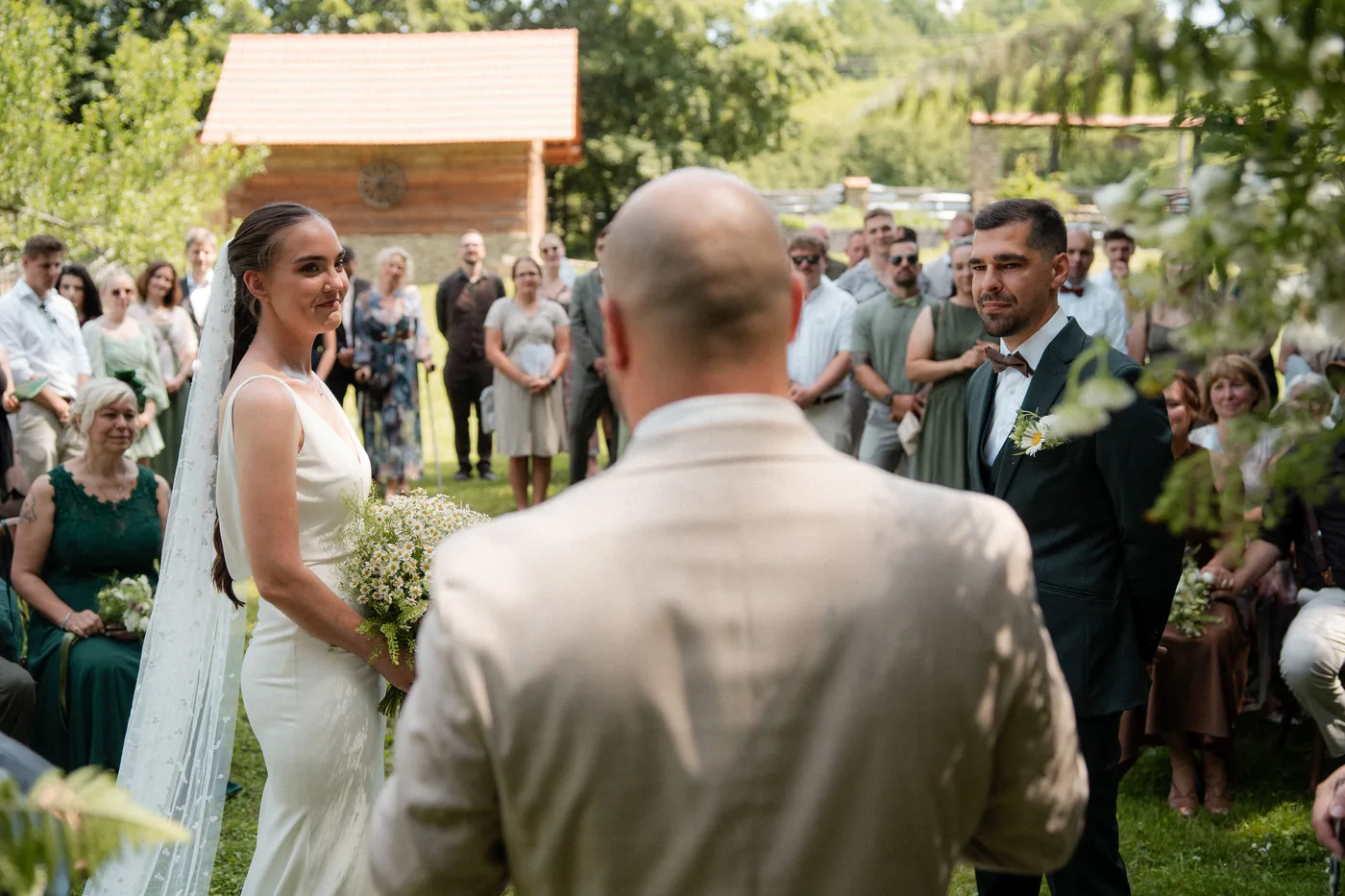
What you avoid: the apostille, the sworn translations, the six-month certificate clock, the Foreign Police errand, the 8,000 CZK in fees, and the court interpreter standing between you during your vows. What you lose: nothing that anyone at the wedding will notice.
The ceremony in the orchard is then led by whoever you want it to be led by, in whatever language, with whatever words. It is not constrained by a statutory formula, which is the part couples usually end up preferring anyway.
This is not a workaround we invented. It is the standard model for destination weddings across Europe, and one of the largest English-language wedding operators in Prague builds its entire business on it, offering symbolic ceremonies only and saying so openly.
Which one to choose
Choose the legal Czech route if one of you is a Czech citizen or resident, if the paperwork is genuinely straightforward from your side, or if you want the legal moment and the celebration to be the same moment and are willing to pay in admin for it.
Choose the split route in almost every other case. Particularly if you are marrying across two nationalities, if either of you is a non-EU citizen, or if you are more than four months out from the date and starting to feel the paperwork is eating the planning.
We can do either. What we would rather not do is let a couple find out in month five that the certificate they were waiting for does not exist in their country.
This is a practical summary written for couples considering our venue, current as of July 2026. It is not legal advice, and fees and requirements change. Confirm anything that matters with the registry office at Velká nad Veličkou or with your embassy before you rely on it.
Kománkův mlýn is a restored 1748 mill estate in the White Carpathians biosphere reserve, an hour and a half from Brno and an hour forty-five from Vienna. Ask us anything about the process or see how a wedding weekend works.
Photographs: The Meadow People, June 2026, published with the couple's permission.